

LEED vs WELL Certification: Which Green Standard Fits Your US Office?.
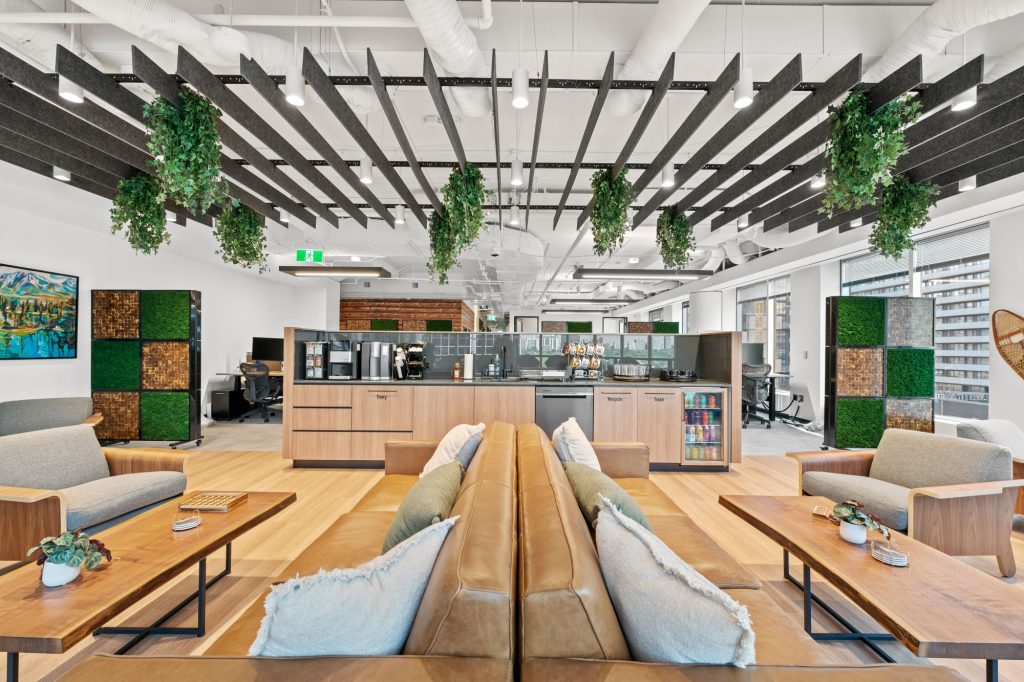
As sustainability and employee wellbeing move from peripheral concerns to core business imperatives, US organisations face critical decisions about green building certifications for their office environments. Two standards dominate the landscape: LEED (Leadership in Energy and Environmental Design) and WELL Building Standard. While both certifications demonstrate commitment to environmental and human health, they employ fundamentally different approaches, require distinct investments, and deliver varying returns.
For leadership teams evaluating green office certification options, understanding the practical differences between LEED and WELL certifications is essential. This guide examines both standards through the lens of business value, comparing implementation costs, operational benefits, employee impact, and measurable ROI to help you determine which standard aligns with your strategic objectives, budget parameters, and organisational culture.
Understanding LEED Certification for US Offices
LEED Framework and Certification Levels
LEED certification, administered by the US Green Building Council (USGBC), represents the most widely recognised green building standard globally. The rating system evaluates buildings across nine key categories including energy and atmosphere, water efficiency, materials and resources, indoor environmental quality, and innovation. Projects earn points in each category, with total scores determining certification level: Certified (40–49 points), Silver (50–59), Gold (60–79), or Platinum (80+).
For commercial office buildings, LEED v4.1 Building Design and Construction provides the primary certification pathway for new construction and major renovations, while LEED v4.1 Operations and Maintenance addresses existing building performance. The flexible point system allows organisations to prioritise strategies aligned with their specific contexts and budgets rather than requiring universal compliance with all criteria.
Cost Structure and Financial Investment
LEED certification costs vary significantly based on building size, target certification level, and baseline building performance. Typical cost components include USGBC registration and review fees, consultant fees for LEED Accredited Professionals, documentation preparation, and additional construction costs for enhanced performance features.
Industry data suggests LEED certification adds 2–8% to total project costs for new construction, with higher percentages typical for renovations of older buildings. For a 100,000 square foot office renovation with a baseline budget of $15 million, LEED Gold certification might require an additional $450,000–$900,000 investment. However, many LEED strategies represent sound investments independent of certification, with formal recognition providing additional marketing and operational value.
Operating cost savings from LEED certified buildings typically offset certification premiums within 3–7 years. Energy consumption reductions of 25–40% translate to substantial annual savings in major US markets, while water efficiency measures reduce consumption by 30–50%.
Market Recognition and Business Benefits
LEED certification enjoys unparalleled market recognition in the United States, with over 100,000 certified commercial projects. This widespread adoption creates tangible business benefits including enhanced corporate reputation, competitive advantage in securing tenants (LEED certified buildings command 5–8% rental premiums in major markets), improved employee recruitment outcomes, and favourable financing terms from lenders prioritising sustainable assets.
Many municipalities offer expedited permitting, density bonuses, tax abatements, or utility rebates for LEED certified developments. These incentives can substantially improve project economics, particularly in sustainability-forward markets like San Francisco, New York City, Seattle, and Portland.
Understanding WELL Building Standard for US Offices
WELL Framework and Certification Approach
The WELL Building Standard, administered by the International WELL Building Institute (IWBI), takes a fundamentally different approach by prioritising human health and wellness outcomes. WELL certification evaluates buildings across ten concepts: air, water, nourishment, light, movement, thermal comfort, sound, materials, mind, and community.
WELL certification requires meeting all preconditions within applicable concepts while earning sufficient optimisation points to achieve Bronze, Silver (50% of available points), Gold (60%), or Platinum (80%). The standard employs rigorous performance verification, including onsite testing of air quality, water quality, light levels, and acoustic conditions to ensure compliance with health-based thresholds.
The WELL framework explicitly connects building features to health outcomes supported by medical and scientific research. Circadian lighting requirements stem from research demonstrating impacts of light exposure on sleep quality and metabolic function. Air quality thresholds reflect evidence linking indoor pollutant levels to respiratory health and cognitive performance.
Investment Requirements and Implementation Costs
WELL certification typically requires higher upfront investment than LEED due to stringent performance requirements and extensive testing protocols. For a 100,000 square foot office project, WELL certification typically adds 5–12% to baseline construction or renovation budgets. Using the same $15 million baseline, WELL Gold certification might require $750,000–$1,800,000 in additional investment.
However, WELL’s focus on occupant health and productivity generates value through different mechanisms. Organisations report measurable improvements in employee satisfaction (15–25% increases in workplace satisfaction scores), reduced absenteeism (2–3% decreases in sick days), enhanced cognitive function (6–10% improvements), and improved employee retention (8–12% reduction in voluntary turnover). When quantified against typical employee compensation levels, these productivity and retention benefits often exceed the premium investment within 12–24 months.
Differentiation and Market Position
WELL Building Standard occupies a distinct market position as the premier certification for workplace wellness and human-centric design. Major corporations including Goldman Sachs, Microsoft, and Salesforce have pursued WELL certification for flagship facilities, establishing the standard as an elite designation associated with progressive workplace strategy.
The certification’s relative scarcity (approximately 4,500 certified projects globally compared to LEED’s 100,000+) creates differentiation value for early adopters seeking to distinguish their workplace offerings, particularly in competitive talent markets.
Comparative Analysis: LEED vs WELL Certification
Primary Focus and Objectives
The fundamental distinction lies in primary focus. LEED certification prioritises environmental performance and resource efficiency, measuring success through reduced energy consumption, water conservation, and sustainable material selection. WELL prioritises human health and wellbeing, measuring success through improved indoor air quality, enhanced lighting conditions, acoustic comfort, and promotion of physical activity.
This distinction shapes every aspect of the certifications from design priorities and system specifications to measurement protocols and ongoing operations. Organisations must clarify whether environmental sustainability or occupant wellness represents the higher priority to determine which certification aligns better with strategic objectives.
Implementation Complexity and Timeline
LEED certification typically follows more straightforward implementation pathways. The point-based system offers flexibility in strategy selection, and documentation requirements follow established patterns familiar to design and construction professionals. Typical LEED certification timelines span 12–18 months from project initiation to final certification.
WELL certification presents more complex implementation challenges due to stringent performance thresholds and extensive testing requirements. Performance verification through onsite testing adds schedule contingency and potential for remediation if initial results fail to meet thresholds. WELL certification timelines typically extend 18–24 months.
Cost-Benefit Analysis and ROI Comparison
LEED certification generates ROI primarily through operational cost savings and asset value enhancement. Typical benefits include energy cost reductions of 25–40% and rental or sale price premiums of 5–8% for certified buildings. Using conservative estimates, these benefits produce annual value of $40,000–$100,000 for a 100,000 square foot office, yielding payback periods of 5–10 years.
WELL certification generates ROI primarily through productivity enhancement and talent management. Productivity improvements of 3–6% (worth $300,000–$600,000 annually for 100 employees averaging $100,000 total compensation), combined with reduced absenteeism and turnover savings, total $470,000–$940,000 annually, producing payback periods of 1–4 years even with WELL’s higher certification premiums.
Strategic Decision Framework
When to Choose LEED
Organisations emphasising environmental sustainability, carbon footprint reduction, and ESG performance in investor communications will find LEED certification better aligned with these objectives. The certification’s focus on measurable environmental metrics directly supports sustainability reporting requirements and corporate climate commitments. LEED also makes more sense for organisations with limited capital budgets, as lower typical premiums and greater flexibility in strategy selection allow certification while managing costs.
When to Choose WELL
Organisations prioritising employee experience, workplace wellness, and talent management should favour WELL certification. Companies competing intensely for scarce talent, particularly in technology, professional services, and creative industries, gain competitive advantage through credible wellness commitments supported by third-party verification. The productivity and retention benefits often prove more valuable than LEED’s operational savings for knowledge work organisations.
The Dual Certification Approach
Some organisations find that both certifications serve complementary purposes, with LEED addressing environmental stewardship and WELL addressing human health. This dual certification strategy demonstrates comprehensive sustainability commitment. However, pursuing both substantially increases costs and implementation complexity, making it appropriate only when both dimensions represent core strategic priorities and budgets support the combined investment.
Financial Incentives and Rebates
Substantial federal, state, and local incentives support green certification investments. The federal Section 179D tax deduction provides up to $5.00 per square foot for energy efficient commercial buildings, potentially reaching $500,000 for a 100,000 square foot building. Investment Tax Credits offset 30% of solar installation costs through 2032.
State programmes vary significantly by location. California offers extensive utility rebates, Energy Upgrade California incentives, and solar rebates. New York provides NYSERDA incentives and NYC property tax abatements for green buildings. Washington State offers sales tax exemptions for energy efficiency equipment. Many cities including San Francisco, New York, Seattle, and Los Angeles offer expedited permitting and property tax benefits for certified projects. Total available incentives often reach 10–20% of certification premiums.
Implementation: Getting It Right
Regardless of which certification you pursue, success requires early planning, integrated design processes, adequate budgeting, experienced consultant support, and ongoing operational commitment. Organisations approaching certification strategically extract maximum value from their investments.
An independent project management partner adds particular value during green certification projects. They coordinate across architectural, mechanical, electrical, and interior design disciplines, manage documentation requirements, oversee performance verification, and ensure the certification process integrates smoothly with broader fit-out delivery. Their experience across multiple certification projects helps avoid the costly learning curve that first-time applicants typically encounter.
To explore how we have delivered sustainable workplace design across the US and globally, or to discuss which certification approach suits your organisation, view our completed projects or get in touch.
Frequently Asked Questions
What is the main difference between LEED and WELL certification?
How much does LEED certification cost compared to WELL?
Which certification delivers better ROI?
Can a building achieve both LEED and WELL certification?
How long does certification take to achieve?
Are there financial incentives available for green certification in the US?
Sources: U.S. Green Building Council (USGBC), International WELL Building Institute (IWBI), Harvard T.H. Chan School of Public Health, World Green Building Council, CoreNet Global, JLL, CBRE, Urban Land Institute (ULI).


